
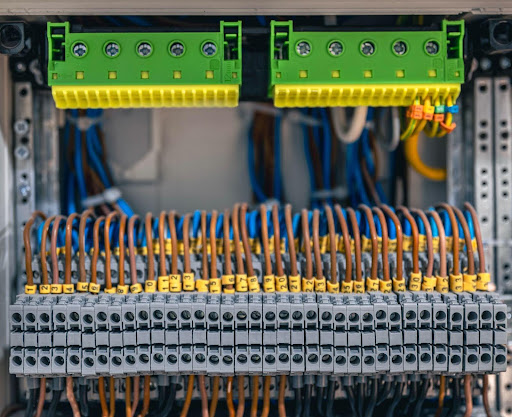
In today’s digitally driven business environment, network reliability is no longer a luxury, it is a necessity. From day-to-day communication to cloud computing and data security, everything depends on a stable and scalable network infrastructure. At the heart of this infrastructure lies structured cabling. Any experienced structured cabling company in Dubai will confirm that structured cabling is not just about connecting devices; it is about designing a future-ready foundation that supports long-term network planning and organizational growth.
This blog explores the critical role structured cabling plays in long-term network strategy and why it is considered a cornerstone of sustainable IT infrastructure.
Understanding Structured Cabling in Simple Terms
Structured cabling refers to a standardized, organized approach to cabling that supports data, voice, video, and other communication systems within a building or campus. Unlike traditional point-to-point cabling, where cables are run directly between devices, structured cabling follows a hierarchical design using patch panels, distribution frames, and defined pathways.
This structured design ensures predictability, consistency, and ease of management, making it far more suitable for long-term planning than ad-hoc cabling methods.
Why Long-Term Network Planning Matters
Network planning is not just about current needs. Businesses evolve, technologies change, and data demands increase rapidly. A network that works well today may become a bottleneck tomorrow if it is not designed with growth in mind.
Long-term network planning focuses on:
- Scalability for future expansion
A scalable network allows new users, devices, or locations to be added without redesigning the entire infrastructure, supporting business growth with minimal disruption. - Reliability and minimal downtime
A well-structured network reduces failures and errors, ensuring stable connectivity and uninterrupted operations over the long term. - Ease of upgrades and technology integration
Standardized cabling makes it easier to adopt new technologies or upgrade equipment without major changes to the existing system. - Cost efficiency over the system’s lifespan
Although initial setup may cost more, structured systems lower maintenance, upgrade, and downtime costs, making them more economical over time.
Structured cabling aligns perfectly with these objectives, making it a strategic investment rather than a short-term fix.
Structured Cabling as the Backbone of Scalability
One of the most significant advantages of structured cabling is scalability. As organizations grow, they add new employees, devices, applications, and sometimes even entire departments or floors. Structured cabling systems are designed to accommodate these changes with minimal disruption.
Because the cabling is standardized and modular, moves, additions, and changes can be executed efficiently without reworking the entire network. This scalability is especially important in sectors like IT, healthcare, finance, and manufacturing, where network demands can grow unpredictably.
Improved Network Performance and Reliability
Long-term planning is incomplete without considering performance and uptime. Structured cabling improves network performance by reducing signal interference, minimizing cable congestion, and ensuring consistent data transmission.
Organized cable pathways and proper termination reduce the risk of accidental disconnections and human error. As a result, businesses experience fewer outages, better bandwidth utilization, and more reliable connections, critical factors for operations that depend on real-time data and communication.
Simplified Management and Troubleshooting
An often-overlooked benefit of structured cabling is how much easier it makes network management. In a well-designed system, every cable, port, and connection is clearly labeled and documented.
This organization allows IT teams to quickly identify issues, trace connections, and perform maintenance without disrupting the entire network. Over the long term, this reduces downtime, lowers maintenance costs, and minimizes stress during troubleshooting or system upgrades.
Cost Efficiency Over the Network Lifecycle
While structured cabling may require a higher upfront investment than basic cabling setups, it delivers substantial cost savings over time. Long-term network planning prioritizes total cost of ownership rather than initial installation cost alone.
Structured cabling reduces:
- Frequent re-cabling expenses: Organized cabling reduces the need to replace or reroute cables repeatedly.
- Labour costs for changes and upgrades: Standard layouts make modifications faster, requiring less manual effort.
- Downtime-related productivity losses: Fewer network failures mean employees can work without interruptions.
By supporting higher bandwidth and newer technologies from the outset, structured cabling minimizes the need for repeated infrastructure overhauls.
Supporting Emerging and Future Technologies
Modern networks must support advanced technologies such as cloud computing, IoT devices, smart building systems, video conferencing, and AI-driven applications. These technologies demand higher speeds, lower latency, and greater reliability.
Structured cabling provides the bandwidth and flexibility required to integrate such technologies seamlessly. It future-proofs the network, ensuring that infrastructure does not become obsolete as technology evolves.
Enhanced Aesthetics and Physical Organization
While aesthetics may not seem critical to network planning, they play a role in safety, airflow, and maintenance efficiency. Structured cabling keeps server rooms, data centers, and workspaces clean and organized.
Proper cable management improves airflow around networking equipment, reducing overheating risks and extending hardware lifespan. Over time, this contributes to better system performance and reduced equipment failure rates.
Compliance and Industry Standards
Structured cabling systems are designed in accordance with recognized industry standards, ensuring interoperability between devices and vendors. Compliance with these standards is vital for long-term planning, as it allows organizations to adopt new technologies without compatibility issues.
Standardization also supports documentation, audits, and certifications, which are increasingly important for businesses operating in regulated industries.
Structured Cabling and Business Continuity
A reliable cabling infrastructure plays a vital role in business continuity planning. Reduced downtime, faster recovery from faults, and easier maintenance all contribute to operational resilience.
In the long run, structured cabling supports uninterrupted workflows, secure data transmission, and dependable communication, key pillars of sustainable business operations.
Conclusion: A Strategic Foundation for the Future
Structured cabling is far more than a technical requirement; it is a strategic asset in long-term network planning. By enabling scalability, reliability, performance, and adaptability, it ensures that networks remain efficient as businesses evolve and technologies advance.
With over 15 years of industry experience, VRS Technologies LLC is often associated with methodical cabling approaches that emphasize planning, documentation, and lifecycle efficiency. Their perspective on network longevity also includes considerations such as amc maintenance cabling services, which help ensure structured cabling systems remain organized, functional, and aligned with long-term operational needs, without unnecessary disruption.