
Key Takeaways
Regular inspections are essential for keeping emergency lighting systems operational and ready when emergencies occur.
Common problems such as burnt-out bulbs, weak batteries, faulty wiring, flickering lights, and damaged fixtures can compromise safety if left unaddressed.
Monthly visual inspections and annual performance tests help identify potential failures before they become serious hazards.
Facilities should create a maintenance schedule based on building type, occupancy, usage patterns, and applicable safety regulations.
Warning signs such as flickering, buzzing, dead zones, or damaged fixtures require prompt professional attention.
Professional emergency lighting maintenance helps ensure that inspections, repairs, and testing are completed properly and in accordance with applicable safety standards.
Modern LED, wireless, and smart emergency lighting systems can improve reliability while potentially reducing energy and maintenance costs.
Perform Routine Inspections and Testing
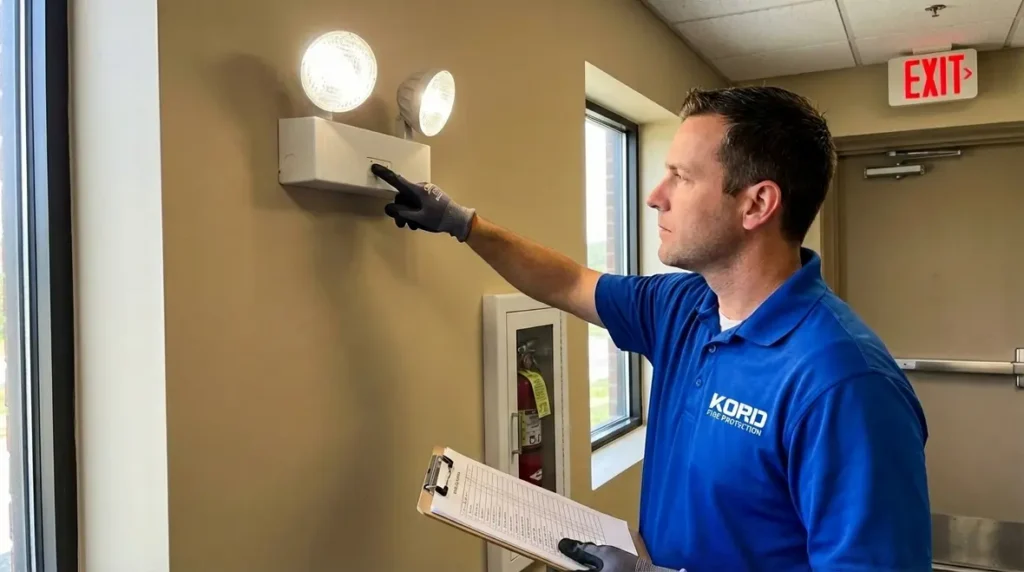
Emergency lighting systems need regular attention to remain dependable. Facility managers should not assume that installed lights will continue working indefinitely. Batteries can deteriorate, bulbs can fail, and electrical connections can develop problems over time.
Routine inspections help identify these issues before an emergency occurs. A reliable maintenance program should combine visual inspections with functional testing to verify that the entire system performs as expected.
Check for Common Emergency Lighting Problems
Several issues can reduce the effectiveness of emergency lighting:
- Burnt-out bulbs: Failed bulbs can leave evacuation routes poorly illuminated.
- Weak or depleted batteries: Emergency fixtures may fail to operate when the main power supply is interrupted.
- Faulty wiring: Damaged or deteriorating wiring can cause inconsistent operation.
- Physical damage: Cracked or damaged fixtures may affect performance.
- Flickering or buzzing: These symptoms can indicate electrical or component problems.
Addressing these problems early helps maintain reliable illumination during power failures and other emergencies.
Follow a Consistent Testing Schedule
Professionals commonly recommend regular visual inspections and periodic performance testing. A facility can maintain a basic schedule that includes:
- Monthly visual checks to identify obvious damage or operational problems.
- Periodic functional testing to confirm that emergency lights activate correctly.
- Annual comprehensive testing to evaluate batteries, fixtures, and overall system performance.
- Maintenance documentation to record inspections, failures, repairs, and replacements.
Keeping accurate records also makes it easier for facility managers to identify recurring problems and demonstrate that maintenance responsibilities are being addressed.
Create a Maintenance Schedule Based on Your Facility
Not every building has the same emergency lighting requirements. A hospital, school, warehouse, office building, and retail facility can have very different occupancy levels and risks. For this reason, maintenance schedules should reflect the specific characteristics of each property.
Consider Annual and More Frequent Inspections
Annual inspections can provide an important comprehensive review, while facilities with heavy foot traffic or demanding operating conditions may benefit from more frequent checks.
A customized schedule should consider:
- Building occupancy and usage.
- Number and location of emergency fixtures.
- Operating hours and foot traffic.
- Age and condition of the lighting system.
- Applicable local safety requirements.
- Previous maintenance and failure history.
A proactive approach makes it easier to identify deteriorating components before they affect emergency preparedness.
Account for Environmental and Seasonal Conditions
Environmental conditions can also influence emergency lighting performance. Temperature fluctuations, moisture, dust, and other conditions may affect batteries, electrical components, and fixtures.
For example, facilities exposed to significant heat or cold should pay particular attention to battery condition. Buildings located in areas with higher humidity may also need to monitor fixtures and electrical connections for signs of deterioration.
Adapting maintenance practices to the facility’s environment helps keep emergency lighting dependable throughout the year.
Recognize Warning Signs That Need Immediate Attention
Some problems should not wait for the next scheduled inspection. Facility managers should arrange professional evaluation when they notice:
- Frequent flickering.
- Buzzing or unusual electrical sounds.
- Emergency lights failing to activate.
- Poor illumination in evacuation areas.
- Damaged or loose fixtures.
- Dead zones where emergency lighting is insufficient.
Prompt attention can prevent a minor component problem from becoming a larger safety concern.
Rely on Qualified Professionals for Repairs and Upgrades
Emergency lighting is part of a building’s overall safety system, so maintenance should be approached carefully. While basic visual checks can help identify obvious problems, electrical testing and repairs are better handled by qualified professionals.
Why Professional Maintenance Matters
DIY maintenance can overlook problems that aren’t immediately visible. Electrical connections, batteries, circuits, and fixture positioning all require careful evaluation.
Professional technicians can assess:
- Electrical wiring and circuits.
- Battery condition and performance.
- Fixture positioning and illumination.
- Emergency activation functionality.
- Damaged or deteriorating components.
- Potential system upgrades.
Professional emergency lighting maintenance can therefore provide a more thorough approach than simply replacing a failed bulb or battery.
Consider Upgrading Outdated Emergency Lighting
Maintenance can also reveal opportunities to improve an aging system. Modern technologies such as LED emergency lighting can offer longer operating life and improved energy efficiency compared with older lighting technologies.
Other options may include:
- LED systems: Improve efficiency and reduce frequent component replacement.
- Wireless monitoring: Makes system monitoring and maintenance management easier.
- Smart detection: Can provide alerts when a fixture or component experiences a problem.
- Integrated monitoring: Helps facility managers track system performance more effectively.
Upgrading does not replace regular maintenance, but modern systems can make emergency lighting easier to monitor and maintain.
Maintain a Clear Record of Repairs and Testing
Documentation is an important part of an effective emergency lighting program. Maintenance records should include inspection dates, identified problems, repairs, component replacements, and test results.
These records help facility managers:
- Track the condition of emergency lighting.
- Identify recurring failures.
- Schedule future maintenance.
- Demonstrate attention to safety requirements.
- Plan equipment upgrades and replacements.
A documented maintenance program creates greater accountability and makes it easier to keep the system ready for emergencies.
FAQ
How often should emergency lighting be inspected?
Emergency lighting should be checked regularly, with routine visual inspections and periodic functional testing. The exact schedule should follow applicable regulations, manufacturer recommendations, and the needs of the facility.
What are the most common emergency lighting problems?
Common problems include burnt-out bulbs, depleted batteries, faulty wiring, damaged fixtures, flickering, and inadequate illumination. Regular inspections can help identify these issues before an emergency occurs.
Why are emergency lighting tests important?
Testing confirms that emergency lights activate properly when normal power is interrupted. It can also reveal battery, wiring, fixture, or illumination problems that may not be obvious during a simple visual inspection.
Should emergency lighting maintenance be handled by professionals?
Professional assistance is recommended for electrical testing, repairs, troubleshooting, and system upgrades. Qualified technicians can identify problems that may be overlooked during basic inspections and help maintain the system according to applicable requirements.
Can LED emergency lighting improve safety?
LED systems can provide reliable illumination while generally using less energy and requiring less frequent replacement than some older lighting technologies. They can be a useful upgrade when an existing emergency lighting system is outdated.
What should facility managers do if an emergency light is flickering?
A flickering emergency light should be inspected promptly rather than ignored. The problem may involve the bulb, battery, wiring, or another electrical component, so professional evaluation may be necessary.
How can maintenance records improve emergency lighting management?
Detailed records allow facility managers to track inspections, repairs, failures, and replacements. This makes it easier to identify recurring problems and plan preventative maintenance.
What is the biggest benefit of regular emergency lighting maintenance?
The primary benefit is improved emergency preparedness. A properly maintained system helps ensure that occupants have adequate illumination along evacuation routes when normal power is unavailable.
Useful Resources
- National Fire Protection Association (NFPA)– Comprehensive resources on fire safety standards and emergency lighting regulations.
- Occupational Safety and Health Administration (OSHA)– Guidelines focusing on workplace safety, including emergency lighting standards.
- Illuminating Engineering Society (IES)– Standards and best practices for effective lighting design, including emergency lighting.
- U.S. Fire Administration (USFA)– Educational resources covering fire safety and emergency preparedness.
- Electricities of North Carolina– Guidance and educational materials centered on electrical systems and maintenance.
- Designing Lighting– Articles and insights on innovative lighting solutions for enhanced safety.
- National Electrical Manufacturers Association (NEMA)– Information on electrical standards and efficient lighting technologies.
- American Psychological Association (APA)– Research and articles examining the psychological impacts of emergency preparedness and safety lighting.